

How To Find Student Accommodation Abroad?
How to find student accommodation abroad is one of the first and most important questions students face after deciding to study overseas. Whether you are planning to study in the UK, USA, Australia, Canada, Ireland or any European country, finding safe, affordable, and reliable student housing abroad plays a crucial role in your overall study abroad experience.
If you need help planning every step of your journey, you can connect with our study abroad agency in Mumbai for personalised guidance.
In this content, we will see the types of student housing options, their advantages, the process, cost and other important factors to be considered while booking the accommodation.
Step-by-Step Guide to Finding Student Accommodation Abroad
Step 1 – Start Early Research On Student Housing Abroad
Once you receive the offer from the university, start searching for accommodation options. Early planning results in more options with better facilities and rent.
Step 2 – Check The On-Campus Option
Visit the official university accommodation portal to explore on-campus student housing options. Check their deadlines, and guarantees for the first year, all the utilities and facilities offered with on-campus accommodation. Check for preferences like single or shared rooms.
Step 3 – Check Off-Campus Accommodations
Check for off-campus options like shared apartments, studios, or homestays using trusted student housing platforms. Check the utilities and services offered by them and the rent charges.
Step 4 – Shortlist The Options
Based on your convenience, shortlist the suitable options considering factors like locations, room types, facilities, contract length, and proximity to campus or public transport.
Step 5 - Plan Your Budget
After checking both the on-campus and off-campus options along with their benefits, you need to plan your budget, how much you can spend on accommodation and then finalise accordingly.
Step 6 – Verify The Listing And Check The Reviews
Once you finalise the option, check its reviews and verify the listing by requesting photos or virtual tours, and confirm ownership or management details. Avoid making any payment before this check.
Step- 7: Finalise & Sign The Agreement
After verification, carefully read the student rental agreement, understand all clauses, and pay the deposit as mentioned to confirm the booking.
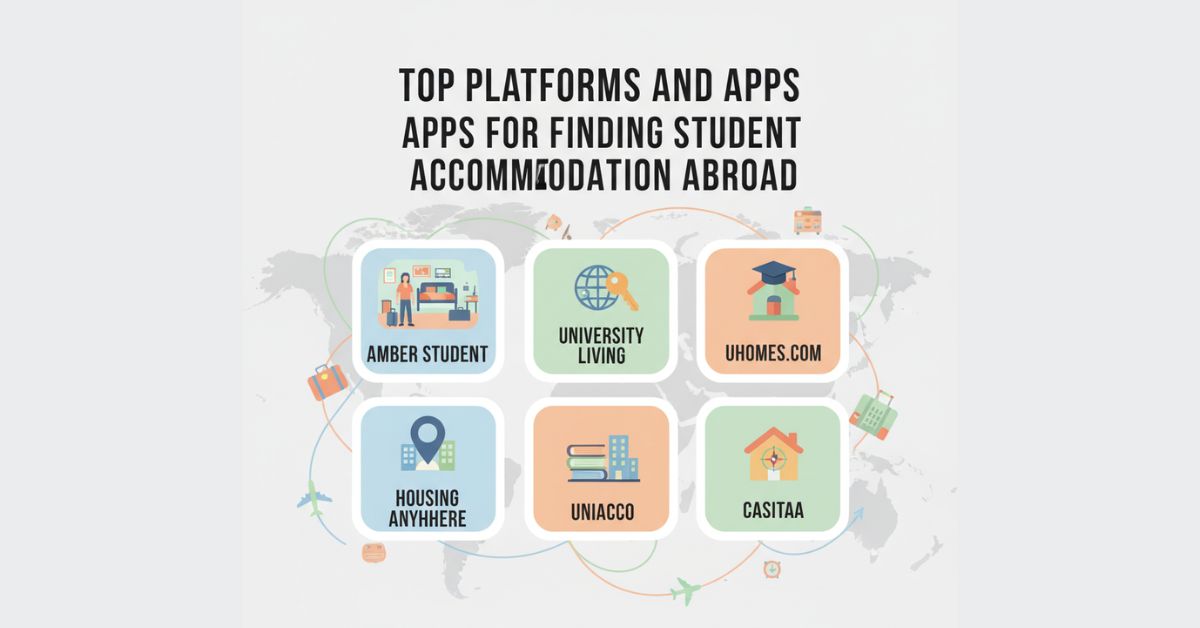
Top Platforms & Apps For Finding Student Accommodation Abroad
Below are some of the trusted platforms for searching student accommodation –
- Amber Student
- University Living
- uhomes.com
- Housing Anywhere
- UniAcco
- Casita
These platforms offer verified student housing abroad and help reduce the risk of accommodation scams.
Common Mistakes to Avoid When Searching for Student Housing Abroad
- Searching late – This is the most common mistake by students; they start searching for accommodation very late, which results in limited options and facilities. prime spots like Dublin, Sydney, London, etc., fill 3–6 months early.
- Ignoring the Budget – Students sometimes ignore the hidden costs like wi-fi, utility charges, deposits, etc., which increase the desired budget and expenses.
- Poor Location Choice – Selecting the wrong location is a major mistake. It causes inconvenience and increased cost. One must consider the factors like locations, room types, facilities, and proximity to campus or public transport.
- Non-Verification of property – Relying only on photos can be problematic, as it can hide issues like poor maintenance, non-availability of utilities or services. Verification of the property must be done through a virtual tour, checking Google reviews.
- Paying without proper check – Paying without proper check can cause risk of loss of deposits, as non-verification of flat/property may lead to inconvenience or discomfort, not having proper services and facilities as shown in pictures.
- Not checking the agreement – This is a major risk which can result in unexpected surprises like loss of deposits, excess or hidden charges, non-refund of money, early termination fees, lack of clarity on rules and regulations, duration of contract, etc.
Essential Questions to Ask Landlords or Accommodation Providers
Before finalising the student accommodation abroad, one must ask the following questions to the accommodation provider –
- What type of Services/utilities are offered? Whether the charges are inclusive or any service is to be paid separately?
- What is the deposit amount, whether its refundable?
- Are there any hidden/extra charges?
- What is the cancellation policy or early termination policy, and are there any charges attached to it?
- Who will be responsible for repairs or maintenance?
- Is the accommodation furnished?
- Is subletting allowed?
- What are the rules and regulations to be followed?

Why Choosing Right Accommodation Abroad Is Important?
Choosing the right student housing abroad directly impacts academic performance and well-being.
- Student Safety & Security – Student accommodation having proper security features like controlled access, CCTV and on-site support will ensure student safety.
- Proximity to campus – If the accommodation is near the study location, it reduces time and transport cost, and students can have easy access to the lab, library, and other campus facilities.
- Focus on Studies – If the student gets a proper place to stay, it reduces their stress and fear of safety, security, travelling, time management, etc., and they can focus on their studies.
- Time Management – If the accommodation is at a convenient location, it helps in time management. It reduces the time of travelling, cleaning, commuting and can utilise that time in studies, projects, networking, part-time work and other things.
- Comfort & Mental peace, Adjustments – Living in a safe and secure place always gives mental peace and comfort to the students in a new environment. It reduces their homesickness and anxiety, mental peace. On-campus housing helps students to adjust to a new country, their culture, community and their education system.
Types of Student Accommodation Abroad
There are many types of student accommodation available for international students. Not one particular form of accommodation is best, but every type has its own advantages and disadvantages.
The following are the various types of accommodation abroad for international students –
1. Purpose-Built Student Accommodation (PBSA)
These are private off-campus student apartments, studios, or en-suite rooms located close to universities. They usually come with facilities like Wi-Fi, gym, laundry, and common areas.
Pros:
- Convenient and student-friendly
- Modern amenities
- Good social and cultural environment
Cons:
- Higher rent compared to other options
Average Cost:
$600 – $1,200 per month
2. University (On-Campus) Accommodation
These include university-managed dormitories or halls with basic furniture, Wi-Fi, and study spaces.
Pros:
- Safe and secure
- Ideal for first-year international students
- Easy access to campus facilities
Cons:
- Limited availability
- Can be expensive in popular universities
Average Cost:
$700 – $1,600 per month
3. Homestay / Host Family Accommodation
Students stay in a rented room with a local family, which helps with cultural exposure and language practice.
Pros:
- Safe and affordable
- Cultural and language exchange
- Meals sometimes included
Cons:
- Limited privacy
Average Cost:
$400 – $800 per month
4. Private Rentals
These are independent apartments or flats suitable for students who prefer privacy and flexibility.
Pros:
- Full privacy
- Flexible living arrangements
Cons:
- High rent and security deposit
- Maintenance responsibility
Average Cost:
$800 – $1,800 per month
5. Shared Apartments / Student Housing
In this option, rent and utilities are shared among two or more students.
Pros:
- More affordable
- Social living experience
- Shared responsibilities and costs
Cons:
- Possible conflicts with roommates
Average Cost:
$500 – $1,000 per month
How to Verify a Student Accommodation Listing & Avoid Scams
- Use the trusted platforms – Prefer the university accommodation portal. Use the proper official websites for getting information and booking. Avoid random listing.
- Verify the property details – Cross-check the address on Google Maps. Check the property through a virtual tour or video call. Check photos and videos of the rooms and area, and check the facilities properly.
- Check Reviews & Online Presence – Always check the online presence and Google reviews before finalising the accommodation. Verify the company name and landlord.
- Never pay without verification – Never pay the amount of deposit without proper verification of the owner and property, and check the agreement properly. Be cautious about tactics like limited liability. Avoid full payment requests.
- Check the Contract Details – Before making any payment, read the contract properly. Contract must include name, address, duration of stay, amount of rent and payment terms.

What To Check In The Student Tenancy Agreement
An applicant must check the following things in the rent agreement –
1- Rent Details
The agreement must include the details of the amount of rent clearly. It should also mention the payment terms, methods and payment dates/schedule. It must have a clause of the late fees or penalty applicable, if the rent instalment is not paid on time.
2- Utility Details
The agreement must clearly indicate the services and facilities provided with the accommodation. It should also specify their charges and clarify whether they are included in the rent or not.
3- Deposit and Refund
Along with the payment terms, the agreement should clearly mention the deposit amount required to be paid to confirm and book the property.
If the visa gets rejected, the student may cancel the accommodation; it should clearly specify the cancellation charges and refund policy.
4- Duration of Agreement
Agreement must have a start date and an end date of the agreement.
5- Notice Period
If the student wants to leave the house, he should inform the owner prior. Notice period has to be mentioned in the agreement itself.
6- House Rules and Regulations
The rules and regulations of the house or property, such as overnight guest or visitor policy, Use of common areas, Smoking, alcohol, or pet restrictions, noise rules and quiet hours, etc, should be properly mentioned in the agreement.
7- Repairs & Maintenance
Agreement should include the repairs and maintenance clause, which states who is responsible for repairs and maintenance of the utilities and property.