

Trusted USA Education Consultants in India, Guiding Since 2010
From shortlisting the right university among thousands to guiding you through the F-1 visa, we help Indian students make confident, informed decisions.
15+ Years of USA Admissions Experience
Choosing the right university in the USA involves much more than selecting a popular name. Students need to compare universities, understand admission requirements, prepare strong applications, and navigate the F-1 visa process with confidence. This is where experienced USA Education Consultants in India can make a real difference.
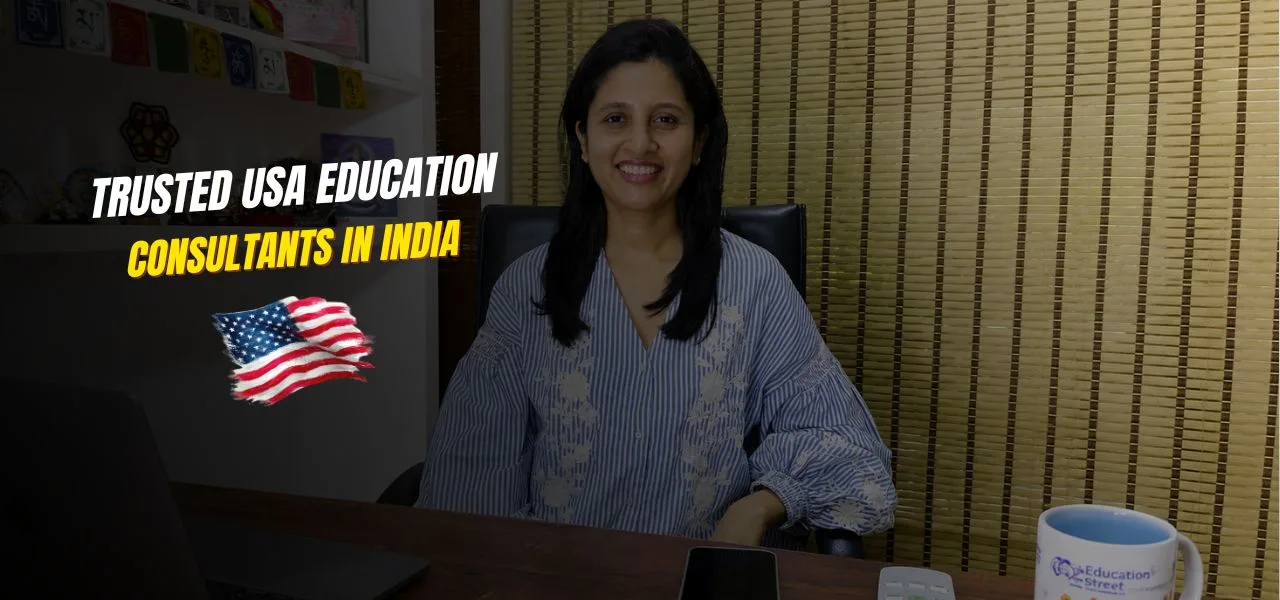
Founded by Ankita Thakker, an MBA graduate from the University of Leeds, UK, Education Street has been guiding Indian students and parents since 2010.
From university shortlisting and application support to visa guidance and pre-departure assistance, our team helps students make informed decisions based on their academic profile, career goals, and budget.
Why Choose Education Street as Your USA Education Consultant?
At first, many students simply say, “I want to study in the USA.” But once we understand their goals, every journey looks different.
Some are focused on affordability, others on research opportunities or specialised programmes, while many are looking for the right education to build the skills and qualifications needed for their future career.
That difference is exactly what Education Street plans around. Instead of pushing the same set of popular universities to every applicant, we build a shortlist around your actual academic profile, budget, and career goals.
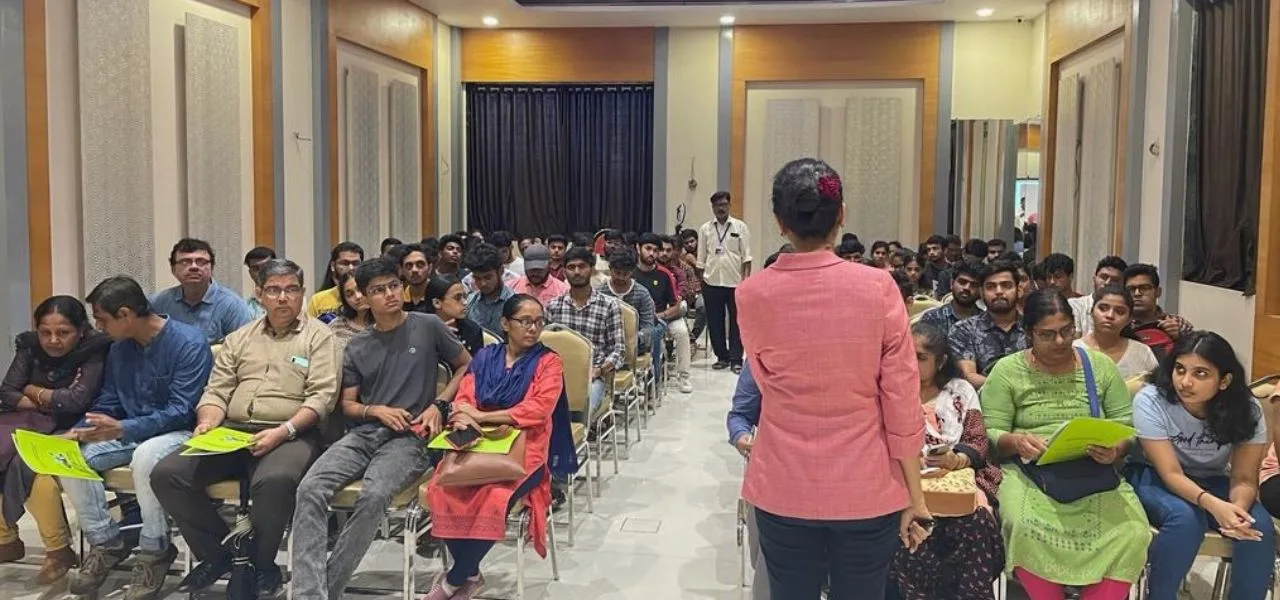
A university’s name does not decide if it is right for you. We check your goals first. If a well-known college is not a good match, we recommend a better one, even if it is less famous.
Since 2010, our counselling approach has remained the same: understand your goals first and recommend universities that genuinely match your profile.
Our Students' Case Study & Success Story
Prasad Kad
One such success story is Prasad Kad, who secured admission to Northeastern University, USA, for the Master of Science (MS) in Quantitative Finance programme. Throughout his application journey, he worked closely with our counselling team to navigate university selection, application preparation, and the admission process.
If you're planning to study in the USA, watching the experiences of students who have already completed the process can give you valuable insights and confidence before you begin your own journey.
His experience reflects the importance of choosing universities that align with your academic profile and career goals rather than applying based only on rankings.
Watch Prasad Kad's Success Story:
The Reach-Match-Safety Framework We Use for Every Shortlist
A shortlist built without structure usually ends one of two ways: rejection after rejection, or a mismatched university that never felt like the right choice.
To avoid both, Education Street builds every shortlist using a Reach-Match-Safety approach, a method borrowed from how experienced US college counsellors think about applications.
Reach
Ambitious universities where admission is competitive but realistic for your profile.
Match
Universities where your academic record and test scores genuinely fit the average admitted student.
Safety
Universities where admission is highly likely, so you always have a dependable backup.

This structure protects students from two common mistakes: applying only to dream colleges and hoping for the best, or playing it too safe and settling for far less than they are capable of achieving.
F-1 Visa, SEVIS, and the I-20: What Happens After You Get an Offer
Once a US university accepts you, the visa process begins, and this is where most families get confused by paperwork and unfamiliar government terminology.
I-20
Issued by your university once you confirm admission and show proof of funds.
SEVIS Fee
A one-time government fee, paid before your visa interview.
DS-160
The US visa application form, which carries a $185 fee.
F-1 Visa Interview
Conducted at the US consulate based on your I-20 and DS-160.
F-1 students are generally admitted to the United States for Duration of Status (D/S), which allows them to remain in the country as long as they continue to meet the conditions of their student status. Always refer to the latest USCIS and U.S. Department of State guidance, as immigration policies may change over time.
If more time is genuinely needed, a formal extension of stay request must be filed with USCIS before the current period ends. Since immigration rules can shift, always confirm the latest position on the official USCIS website before making any visa-related decision.
OPT and STEM OPT: Working in the US After You Graduate
For most Indian students, the real question is not only “will I get admission,” it is “can I work there afterward.” The answer is yes, through Optional Practical Training, and it does not require a separate employer sponsor to begin.
- OPT allows F-1 graduates to work in the US for twelve months after completing their degree
- A STEM-designated degree adds 24 more months of work time. So instead of 12 months, you get 36 months in total
- STEM OPT requires your employer to be enrolled in E-Verify, so this is worth checking before accepting a job offer
- The government filing fee for OPT and STEM OPT applications currently falls between $470 and $520, depending on how you file
This is one of the biggest reasons students choose the US over other countries, and it is also one of the most misunderstood parts of the process, which is exactly where the right guidance helps you avoid an expensive mistake.
Our USA Counselling Process, Step by Step
Profile and Test Strategy Review
We evaluate your academics and help you decide whether SAT, ACT, or a test-optional path suits you better.
Reach-Match-Safety Shortlisting
Universities are shortlisted based on your actual profile, not popularity or rankings alone.
Essay and Application Guidance
Since personal essays are an important part of many US university applications, we provide guidance to help you present your experiences, achievements, and future goals effectively.
Application Support
Whether you apply through the Common Application or directly to a university, we track every deadline with you.
F-1 Visa and I-20 Guidance
Once you are admitted, we walk you through SEVIS payment, DS-160, and interview preparation.
Pre-Departure and OPT Planning
From accommodation to understanding your OPT timeline, we stay involved well after your offer letter arrives.
Who Should Choose a USA Education Consultant?
Studying in the USA involves much more than choosing a university. From selecting the right course and preparing applications to understanding visa requirements, expert guidance can help you make informed decisions throughout the process.
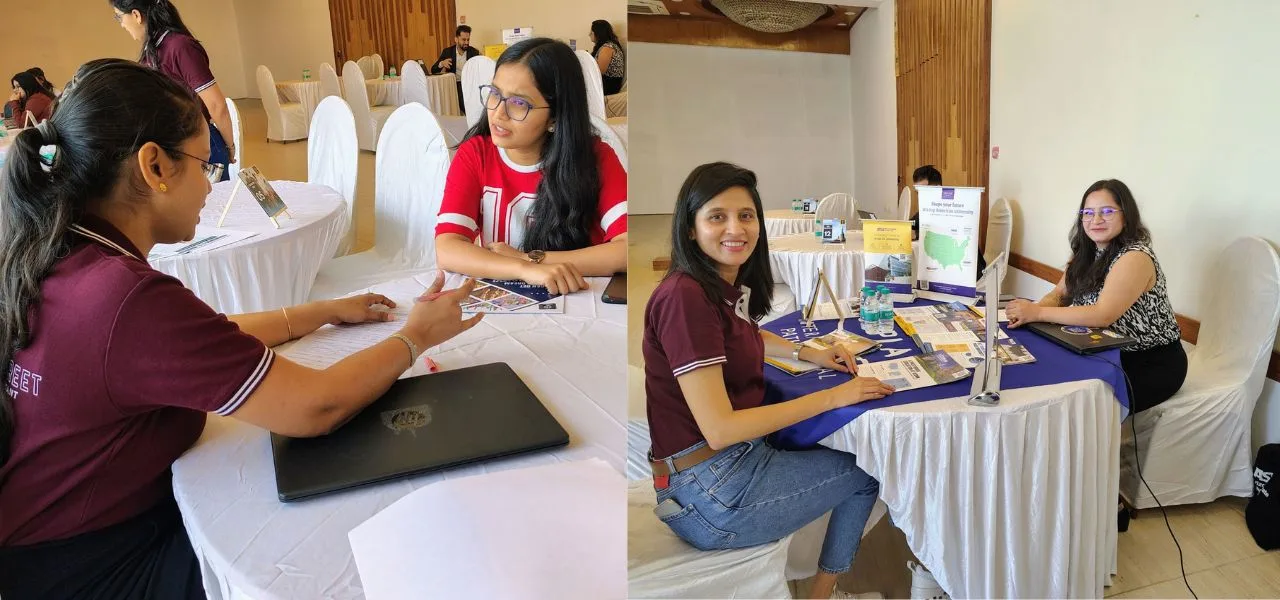
Education Street can help if you are:
- A Class 12 student planning to pursue a Bachelor’s degree in the USA.
- A graduate or working professional applying for a Master’s or MBA in the USA, or other postgraduate programmes.
- Looking for scholarship opportunities and guidance on university selection.
- Unsure which universities best match your academic profile, budget, and career goals.
- Preparing for the F-1 student visa and need support with the I-20, SEVIS, and visa interview process.
- Seeking personalised guidance from experienced USA Study Abroad Consultants in India, whether you’re in Mumbai or anywhere else in the country.
Whether you’re just starting your study abroad journey or ready to apply, the right guidance can help you avoid common mistakes and make confident decisions at every stage.
Why Indian Students and Parents Choose Education Street for USA Admissions
- One dedicated counsellor throughout your journey, not a different person every time you call
- Recommendations based on your profile and budget, never on which university pays the highest referral
- Support for scholarships, education loans and realistic cost planning before you commit to a country
- Guidance that continues through your visa process and well into settling into a new country
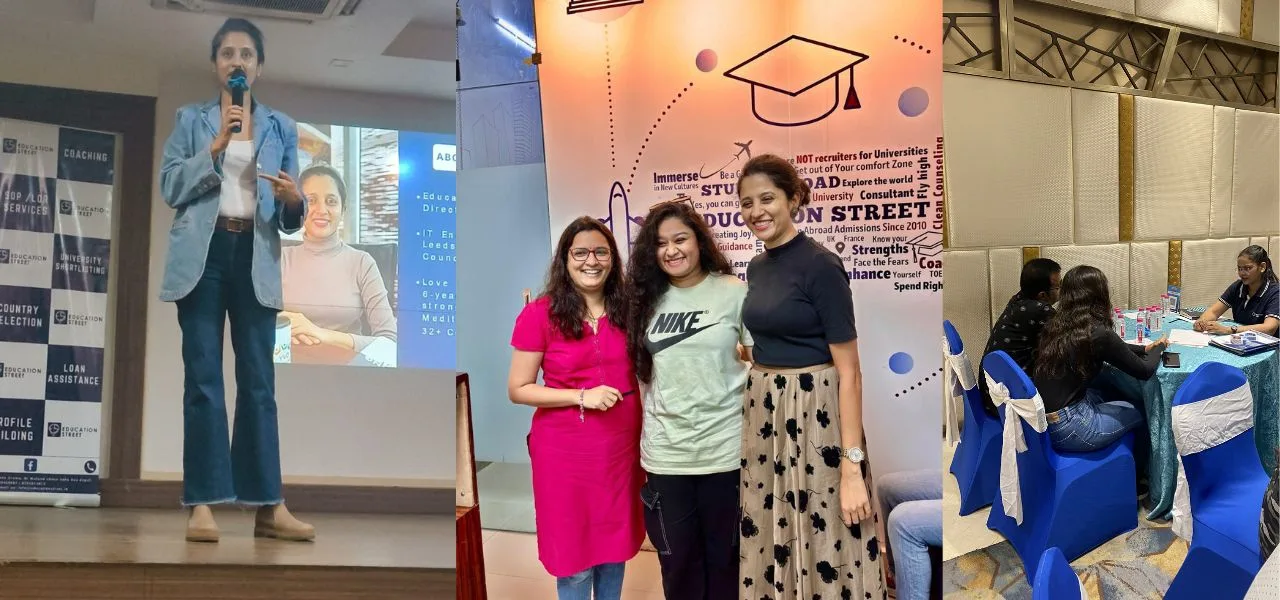
Do You Need to Be in Mumbai, or Can We Guide You From Anywhere in India?
While Education Street is based in Mumbai, most USA counselling happens through video calls, phone consultations and WhatsApp support.
Students from Delhi, Bengaluru, Pune, Hyderabad, Chennai and other cities across India receive the same depth of personalised guidance as someone visiting the office in person.
Distance never decides the quality of counselling you receive, and most documents can be reviewed and shared digitally without ever needing an in-person meeting.
Common Mistakes Students Make While Applying to the USA
- Applying only to well-known universities and ignoring better-fit options that offer stronger outcomes for less money
- Writing generic essays that could belong to almost any applicant, instead of something personal
- Underestimating the real cost of living in the US, not just tuition fees
- Waiting too long to start test preparation or the SEVIS and visa process, which leaves little room for error
- Many students do not understand OPT and STEM OPT properly. This mistake can affect their career later
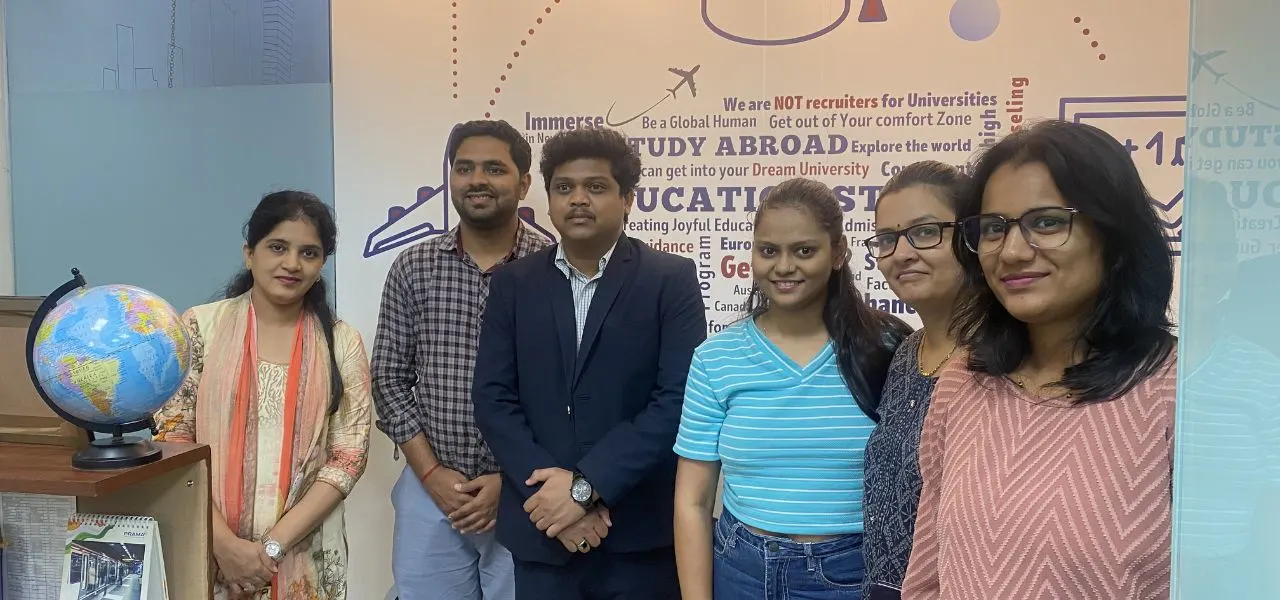
Our Commitment to Accurate, Up-to-Date USA Admissions Guidance
US admission requirements, tuition costs and visa rules change more often than most families realise. Our counsellors regularly review official university and USCIS information before advising students, and we encourage every family to verify the latest visa and immigration details directly on the official USCIS website before making a final decision.
Studying in the US is one of the biggest decisions a family will make, and the right guidance early on usually matters more than any single university name on the shortlist.
If you are still weighing your options, a short conversation with our counselling team can help you see the full picture before you commit to a path.
Our Commitment to Accurate, Up-to-Date USA Admissions Guidance
US admission requirements, tuition costs and visa rules change more often than most families realise. Our counsellors regularly review official university and USCIS information before advising students, and we encourage every family to verify the latest visa and immigration details directly on the official USCIS website before making a final decision.
Studying in the US is one of the biggest decisions a family will make, and the right guidance early on usually matters more than any single university name on the shortlist.
If you are still weighing your options, a short conversation with our counselling team can help you see the full picture before you commit to a path.
FAQs
Fees vary depending on how much support you need, from shortlisting help alone to full end-to-end guidance through your visa. Education Street explains exact pricing during your initial consultation, based on the services you choose
Education Street is a trusted Study in USA consultant that focuses on one dedicated counsellor per student and shortlists based on fit.
It depends on the university. Several highly selective universities have brought back mandatory SAT or ACT scores in recent years, while most other four-year colleges remain test-optional.
Not always. Many US universities, especially in fields like business analytics and computer science, have made the GRE optional or removed it entirely for certain programmes. Requirements vary by university and course
Ideally, twelve to eighteen months before your intended intake. This gives you enough time for test preparation, essay writing, document collection, and the F-1 visa process.
No genuine consultant can guarantee admission or a visa. Admissions are decided by university committees based on merit, and visa approval rests solely with the US Consulate.
Some education agents work with partner universities and may receive commissions for eligible student enrolments. Before choosing a consultant, it’s worth asking how university recommendations are made and whether they are based on your academic profile and career goals.
Yes, most reputable consultants guide students on merit-based scholarships, external grants and education loan options alongside university applications. This is usually part of a full counselling package rather than a separate paid add-on.
You can apply on your own, especially through the Common Application. A consultant becomes useful when you want help shortlisting universities that fit your profile, reviewing essays before submission, and navigating the F-1 visa and SEVIS process without costly mistakes.
Check whether they recommend non-partner universities, who will personally handle your application, whether they review documents before submission, and whether support continues after your visa is approved.
Ask directly why a university is being recommended and whether it is a partner institution. A consultant working in your interest can explain how the university matches your academics, budget and goals, not just that it is on their approved list.
Yes. Most USA counselling today happens through video calls, phone consultations and WhatsApp support. So students from Delhi, Bengaluru, Pune, Hyderabad and other cities receive the same depth of guidance as someone visiting the office in person.
Yes, for most students. Document review, shortlisting, essay feedback and even visa preparation can all be done digitally without losing quality. The depth of guidance depends on the counsellor’s attention, not on whether the meeting happens online or in person.
Bring your academic transcripts, any test scores already taken such as SAT, GRE or English proficiency results, and a general sense of your budget. You do not need a finalised university list yet, since that shortlisting happens during the counselling process itself.